
PVTIME – Trina Solar International Solutions Business Unit and EDF have entered into two long-term storage optimisation agreements, covering a total of 179.8MWh of grid-scale battery energy storage system capacity in the UK.
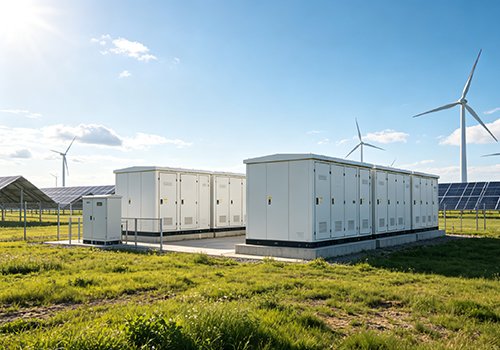
The 40MW/80MWh Ruby BESS project near Aberdeen is scheduled to reach full commercial operation in October 2026. The Chatterley BESS facility in Gloucestershire, with a rating of 49.9MW/99.8MWh, is expected to begin commercial operations in March 2027. Both assets are configured with a two-hour discharge duration.
Trina Solar ISBU retains ownership of both facilities and is responsible for electrical integration and battery cluster deployment. EDF will be responsible for strategic dispatch and participation in multiple UK power markets, as well as day-to-day asset optimisation, through its proprietary PowerShift digital trading and optimisation platform.
The PowerShift platform automatically generates charge and discharge schedules by integrating real-time EPEX SPOT spot price curves, micro-weather forecasts from the UK Met Office, and National Grid frequency deviation data. The system is designed to charge during periods of low demand or high renewable output, and to discharge during evening peak demand or price spikes. Arbitrage is used to cover fixed operating and maintenance costs. EDF has indicated that this approach could increase annual dispatchable hours to over 1.2 times the industry average for projects of this scale.
At the control layer, the optimisation protocol requires the power conversion and battery management systems to open standard communication interfaces that support the exchange of instructions at the millisecond level via Modbus TCP or IEC 61850. PowerShift’s state-of-charge window management algorithm dynamically sets charge and discharge boundaries to prevent cells from remaining in high-stress zones for extended periods. In conjunction with thermal management feedback, the platform is designed to compensate for degradation in cell consistency and slow capacity fade in real time.
These features are expected to provide peak shaving, frequency regulation and other flexibility services to the UK grid, supporting the integration of local wind and solar generation and helping to maintain system stability.
EDF has previously validated the PowerShift commercial model on several large-scale projects in the UK, including the Thorpe Marsh facility, the 350MW Hams Hall project, and the 500MW Eccles scheme. Trina Solar has delivered the 50MW Field Storage Project in Wales and, earlier this year, announced a €1 billion fund dedicated to deploying 12GWh of battery manufacturing capacity in Europe.