
PVTIME – Solar photovoltaic generation has significantly alleviated the financial pressures of Europe’s energy crisis, with industry analysis confirming savings of €10 billion on gas imports since early March amid escalating geopolitical tensions in the Middle East. According to data from SolarPower Europe, consistent solar power output has offset substantial fossil fuel expenditure, with an average daily gas cost saving of €110 million recorded in March.

Picture: SolarPower EU
Over the period, regional gas market volatility intensified, driven by disrupted shipping routes in the Strait of Hormuz and compromised fossil fuel infrastructure. European gas futures prices peaked at over €60/MWh in March, more than doubling the previous monthly average, before falling to around €38/MWh in mid-April, and then rising again to approximately €52/MWh.
SolarPower Europe’s assessment shows that the accumulated savings of €10 billion would finance 8 GW of new EU photovoltaic capacity, accounting for around 12% of the bloc’s total projected PV installations in 2025.
SolarPower Europe CEO Walburga Hemetsberger suggests that these substantial energy-related expenses could have been avoided, even though the full financial impact of the latest energy crisis remains to be calculated. She confirms that the EU’s overall economic losses stemming from the Russia–Ukraine energy crisis have reached €1.7 trillion to date.
The latest annual research from the EU Copernicus Climate Change Service highlights consistent growth in European solar penetration throughout 2025. Solar energy fulfilled 12.5% of the region’s electricity demand over the year, up from 10.3% the previous year, reflecting steady progress in the region’s energy transition.
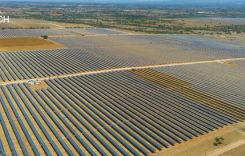
The improved solar utilisation rate is primarily due to increased regional PV capacity, which reached 65 GW across Europe in 2025. Favourable solar irradiance in north-west, central and eastern Europe boosted power generation, though suboptimal sunlight in southern and northern Europe offset these gains to some extent. Lower atmospheric aerosol concentrations, brought about by regional air quality policies, also improved the efficiency of overall PV generation.
In 2025, renewable sources supplied 46.4% of Europe’s electricity, maintaining year-on-year stability. The contribution of wind power edged slightly lower, from 18.4% to 18%. Notably, the combined output of solar and wind power generation exceeded that of coal and gas facilities for the first time, establishing renewable energy as Europe’s dominant power source.

Scan the QR code to follow PVTIME official account on Wechat for latest news on PV+ES