

PVTIME – The International Renewable Energy Agency (IRENA) has outlined in its latest report that Vietnam has emerged as the globe’s most cost-competitive PV manufacturing centre outside China. China retains its position as the global leader in the PV supply chain, but Vietnam now delivers manufacturing costs that rival those in China itself, cementing its status as a key player in the global industry.
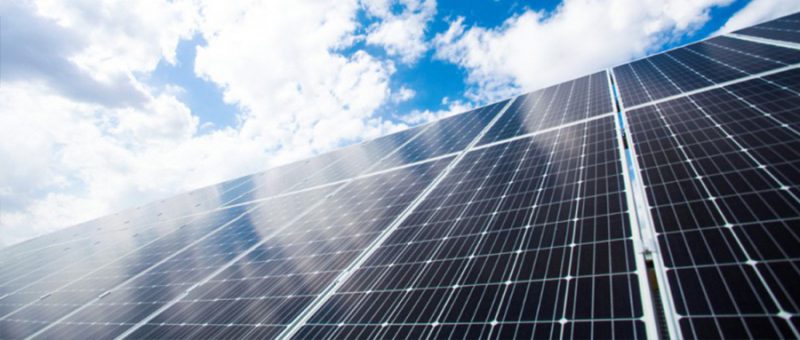
Cost benchmarks detailed in the report highlight Vietnam’s competitive standing. In 2025, the total cost of TOPCon modules produced in Vietnam was $0.180/W, with IRENA projecting a further reduction to $0.171/W by 2030. By comparison, fully domestic module production in India currently costs $0.191/W, while Australia and Germany face significantly higher manufacturing expenses at $0.256/W and $0.284/W respectively.
Vietnam’s ability to compete effectively stems from three key pillars: favourable government policies, low labour costs and affordable electricity tariffs. The country is also one of the few Asian nations to boast a complete PV supply chain, a factor that strengthens its manufacturing capabilities. Germany, by contrast, faces constraints to its manufacturing viability due to high electricity prices, elevated labour and construction costs, and limited economies of scale.
IRENA’s analysis identifies electricity consumption and silver paste usage as the primary drivers of PV manufacturing costs. The report forecasts notable efficiency improvements between 2025 and 2030: power consumption will fall by 6% in the polysilicon and wafer segments, 25% in the cell segment and 20% in the module segment. Technological innovation is also expected to reduce silver consumption by 25% over the same period.
IRENA’s report also quantifies the cost-reduction potential of a hybrid manufacturing approach, using Vietnam as a case study. Utilising imported cells for module assembly could reduce total costs from $0.180/W to $0.124/W, representing a 31% decrease. Sourcing Chinese-manufactured wafers would lower costs to $0.146/W, demonstrating that final module pricing is heavily dependent on whether key components are sourced domestically or imported.
To support sustainable PV manufacturing globally, IRENA has put forward a series of policy recommendations for national governments. These include providing preferential industrial electricity tariffs, promoting on-site power generation and consumption, and facilitating access to low-cost energy through Power Purchase Agreements (PPAs). The report also advocates for the establishment of incentive mechanisms modelled on India’s Production-Linked Incentive (PLI) scheme, alongside the introduction of rigorous national quality standards and a register of certified manufacturers to enhance project financing reliability and drive export growth.

Scan the QR code to follow PVTIME official account on Wechat for latest news on PV+ES


 has outlined in its latest report that Vietnam has emerged as the globe’s most cost-competitive PV manufacturing centre outside China. China retains…)