
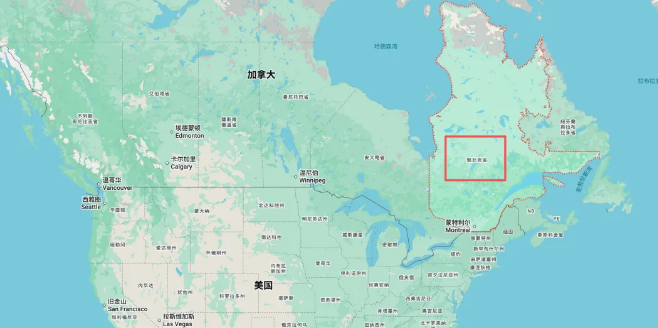
PVTIME – Hydro-Québec has launched a significant solar subsidy initiative in an effort to address Quebec’s status as one of the least developed regions in Canada for solar energy. While the province’s abundant hydropower delivers low, stable electricity prices, it has historically resulted in lengthy payback periods for solar projects, which has discouraged investor participation.
The new capacity-based subsidy offers CAD 1,000 per kW, covering up to 40% of project costs, thereby mitigating the substantial initial investment required for solar system installation. This reduces the typical payback period from 25–30 years to 10–12 years, reclassifying solar projects from long-term environmental commitments to financially viable energy assets. For businesses, this change is pivotal as it enables solar projects to be included in internal investment decision frameworks.
Different application criteria apply to residential and commercial-industrial projects. Residential installations commissioned after 30 June 2025 can apply retroactively via the LogiVert platform. Commercial and industrial projects only qualify if equipment is procured after the policy’s official announcement on 31 March 2026. A Grid Connection permit from Hydro-Québec is mandatory for all subsidy claims.
The policy also expands the existing net metering mechanism, whereby users can export surplus electricity to the grid in exchange for kWh credits to offset future energy bills. The capacity limit for this scheme has increased 20-fold from 50kW to 1MW.
This expansion reflects a strategic shift in how distributed energy is perceived. Previously restricted to 50kW to prevent reverse current from disrupting grid stability, distributed energy is now recognised as a potential component of virtual power plants. With integrated energy storage, these distributed nodes can provide effective peak shaving and valley filling during periods of peak electricity demand in winter.
The increased capacity limit reshapes the principles of project design, enabling commercial and industrial developments to be sized according to their actual energy needs rather than arbitrary policy constraints. This transition elevates distributed energy from a user-side accessory to a system-side resource.
To ensure quality control alongside expansion in scale, the policy incorporates a robust set of eligibility criteria. All projects must undergo auditing through either the OSE calculation tool or the LogiVert system, and secure official grid connection approval. This emphasises the importance of standardisation in large-scale solar development in Quebec.

Scan the QR code to follow PVTIME official account on Wechat for latest news on PV+ES