
PVTIME – Tesla has submitted a tax incentive application to the Texas Comptroller of Public Accounts for Project Crystal Sun, a significant photovoltaic manufacturing development planned near Richmond in Fort Bend County. The scheme is the largest manufacturing investment that the company has formally documented to date, with a total capital outlay of USD 10.1 billion. It is designed to deliver fully integrated domestic solar production, spanning silicon ingots, wafers, cells, and finished modules.
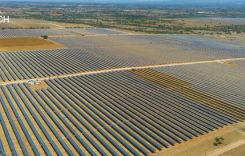
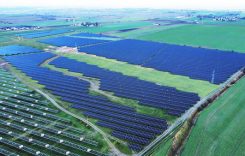
The proposed facility will occupy approximately 3,050 acres. USD 1.5 billion of the total investment is allocated to real property, while USD 8.6 billion is assigned to production equipment and movable assets. The site infrastructure will support closed-loop manufacturing operations, from raw silicon feedstock to finished photovoltaic products. This will cover ingot pulling, wafer cutting, cell coating, metallisation printing, cell testing, clean-room facilities, automated logistics, and associated chemical processing plant. Although no official production capacity has been disclosed in regulatory filings, industry assessments suggest that the completed complex could achieve an output of 100GW.
Construction activities are scheduled from 2026 to 2028, with the aim of achieving commercial commissioning in the first quarter of 2029. Once fully operational, the development is expected to generate 9,712 permanent full-time roles, as well as 1,147 temporary positions for construction workers. Tesla is seeking up to ten years of property tax exemptions under Texas’ Jobs, Energy, Technology and Innovation Act. The firm is continuing to evaluate alternative locations in the United States, and approval of the requested tax concessions will be a critical factor in finalising the Texas site selection.
This investment comes amid substantial shifts in United States solar trade policy. The forthcoming Section 232 tariff measures are set to take effect in December 2026, while anti-dumping and countervailing duty investigations are ongoing. These policy developments are increasing the cost of imported solar goods and encouraging investors to focus on domestic upstream manufacturing. Historically, US-based solar capacity has largely been concentrated in module assembly, with wafer and cell supplies heavily reliant on overseas imports. The successful delivery of Project Crystal Sun would address key domestic shortfalls in wafer and cell output, reshaping national photovoltaic supply chain dynamics in the process.
However, analysts point to the material risks attached to such large-scale, capital-intensive projects, including high capital expenditure requirements and extended payback periods. There are still uncertainties around regulatory clearances, final site negotiations and financing arrangements, so there can be no guarantee that the project will reach commercial operation in a timely manner. Operators such as Qcells already have integrated solar manufacturing facilities in the United States. Changing trade rules are encouraging other market participants to consider the business case for domestic upstream solar production, which could lead to a new wave of related investment activity.

Scan the QR code to follow PVTIME official account on Wechat for latest news on PV+ES