

PVTIME – Researchers at the University of New England’s (UNE) Institute for Strategic Artificial Intelligence (ISA) are using AI and supercomputers to simulate the extraction of silicon from end-of-life solar panels. The study aims to identify efficient solvents and chemical processes as an alternative to the traditional trial-and-error approach used in laboratories, with the goal of improving the purity and efficiency of recycled silicon.
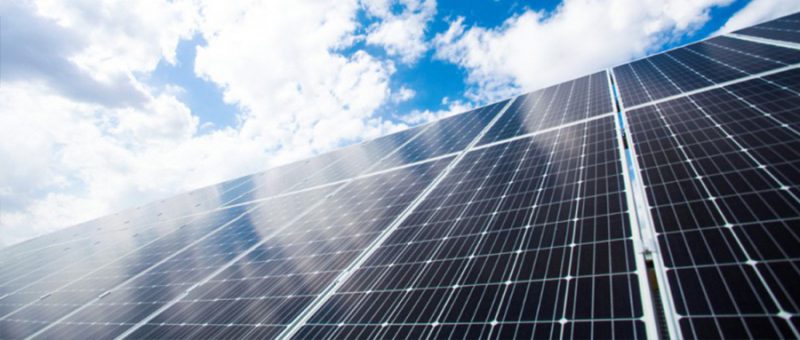
The growth in global solar capacity has brought panel recycling to the forefront of the industry. Although 95% of a panel’s mass is recyclable, recovering pure silicon remains problematic; according to Germany’s Solar Materials, it rarely exceeds 95%, and intact wafers are usually unrecoverable directly.
The UNE team uses AI-driven quantum chemical simulations to model the behaviour of solvent molecules, evaluating formulas to identify those that can cleanly separate silicon wafers. This digital approach reduces the R&D cycle by eliminating the need for time-consuming physical laboratory testing.
This research is highly significant from an economic perspective: global annual solar capacity is expected to reach 1TW by 2030, and Australia is predicted to generate 1 million tonnes of end-of-life panels by 2035, worth over AU$1 billion. ISA is partnering with ACEN Australia, which supplies experimental panels. Its general manager, David Pollington, notes that the research will enhance the effectiveness of recycling.
Team member Professor Amir Karton explained that the system creates an efficient feedback loop between AI predictions and experiments, accelerating the identification of optimal recycling pathways. The project is supported by UNE’s AI platform and an automated robotics laboratory valued at AU$2.7 billion, which is funded by the Australian Research Council (ARC).

Scan the QR code to follow PVTIME official account on Wechat for latest news on PV+ES

 Institute for Strategic Artificial Intelligence (ISA) are using AI and supercomputers to simulate the extraction of silicon from end-of-life solar…)