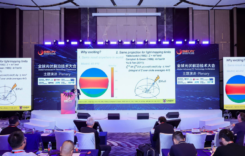

PVTIME – After four rounds of negotiations, eight leading Chinese polysilicon manufacturers finalised a significant industry agreement in Shanghai on 6 August, signing an anti-cutthroat competition initiative. The signatory enterprises represent over 90% of China’s operational polysilicon production capacity and cover all of the country’s major active producers. This unites established industry leaders, regional frontrunners and high-growth newcomers, creating an exceptionally comprehensive industrial self-regulation framework.
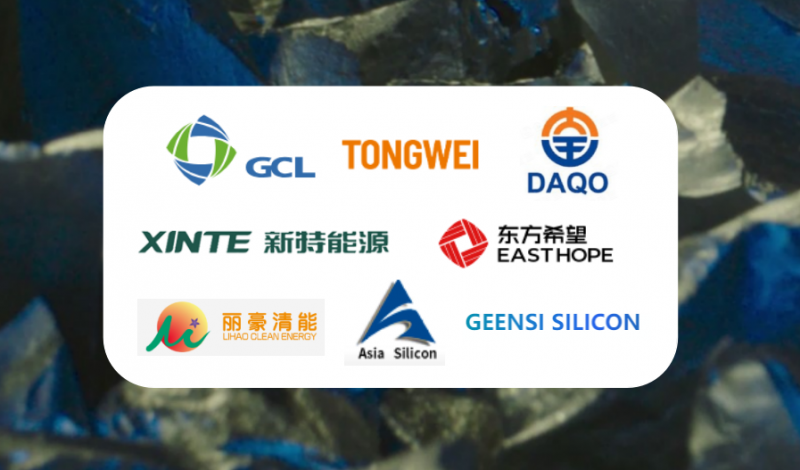
Participating manufacturers include: Tongwei Co., Ltd., GCL Technology Holdings Limited, Daqo New Energy Corp.,Xinte Energy Co., Ltd., Asia Silicon (Qinghai) Co., Ltd., Xinjiang East Hope New Energy Co., Ltd., Qinghai Lihao Clean Energy Co., Ltd. and Xinjiang Geensi Silicon Technology Co., Ltd.
This binding agreement is the first substantive cross-industry self-regulation pact signed by photovoltaic upstream leaders across the entire supply chain, providing much greater industry governance than previous price-only restraint measures.
Signatory enterprises have committed to four core operational terms within the unified industry framework.
1 To adopt standardised operational practices consistent with global carbon neutrality goals and ESG standards, so as to advance high-quality and sustainable development across the photovoltaic upstream industry.
2 To apply full-cost pricing to all product sales and tender quotations, in strict accordance with the General Principles for the Photovoltaic Industry Cost Accounting Model.
3 To remedy any identified below-cost sales behaviour in a timely manner and rectify non-compliant market practices immediately.
4 To implement mutual industry supervision and formally report any irregular pricing conduct directly to the State Administration for Market Regulation.
The initiative enforces stringent new energy consumption standards in order to phase out high-energy consumption and outdated production methods. Industry stakeholders recognise that, as a core foundational material for global new energy development, polysilicon must undergo operational upgrades to reduce energy consumption and carbon emissions in order to eliminate industry-wide energy-intensive drawbacks.
The framework also regulates overall capacity expansion, prioritising high-efficiency, low-energy, environmentally compliant capacity in order to accelerate the phase-out of outdated production lines and ensure reasonable profit returns for premium capacity, while preventing redundant, low-level construction and blind output growth.
A set of rigorous disciplinary measures has been formulated to guarantee policy implementation. Relevant authorities will enforce the Price Law fully to curb predatory pricing behaviours. A unified industry price threshold will be established, and the entire industry will suspend material supply to enterprises engaging in below-cost sales. Financial institutions are also encouraged to withdraw financing support from enterprises engaging in unfair market practices.
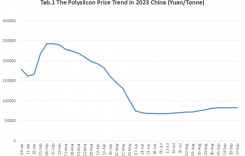
The regulatory accord has triggered significant positive responses in the market. Since 3 August, the polysilicon futures main contract has maintained continuous upward momentum, rising from 33,040 yuan per tonne to 36,715 yuan per tonne by the close of 4 August. The contract has achieved a cumulative increase of over 11% across four trading sessions, with multiple limit-up movements.
Two years of brutal price wars in the industry had pushed most polysilicon producers into substantial losses, with market prices persistently falling below enterprise cash costs. The new industry consensus has effectively stabilised polysilicon market prices, officially initiating a sector-wide recovery cycle. Market insiders anticipate significant improvements to the industry’s supply and demand balance in the third quarter, driven by the accelerated exit of backward capacity and the restoration of standardised pricing. Unlike traditional output restriction measures, this comprehensive self-regulatory mechanism aims to promote long-term, high-quality industrial development, providing greater enforceability and sustainability in order to end the prolonged downturn in the domestic polysilicon sector.

Scan the QR code to follow PVTIME official account on Wechat for latest news on PV+ES