

PVTIME – The International Energy Agency’s Photovoltaic Power Systems Programme (IEA PVPS) has released its 2025 global solar PV market report. The report confirms a record 698GW of new solar PV installations worldwide, representing a 16% year-on-year increase. Cumulative global PV capacity has now surpassed 3TW, with solar power accounting for 10.5% of global electricity demand.

As PV penetration rises, the industry’s focus is shifting strategically, with market bottlenecks moving from module costs to grid integration, energy storage, and curtailment management. System integration and flexibility are now crucial for global deployment. The 698GW of new installations, up from 602GW in 2024, brings the industry closer to the 1TW annual target projected by experts. China, the EU and India are leading annual installations, with China accounting for almost 60%. Meanwhile, the US has dropped out of the top three. Growth of 16% is lower than in 2023 (93%) and 2024 (28%).
The IEA PVPS estimates that China will install 349.8GW (AC) in 2025, which is above the 315GW officially reported by China’s National Energy Administration. Germany ranks fifth in terms of cumulative capacity, followed by Japan, Brazil, Spain, Australia and Italy. After two years of strong growth, Pakistan enters the global top 10 for cumulative capacity with 15.8GW, while Saudi Arabia is among the top 10 for annual installations with 6.8GW.
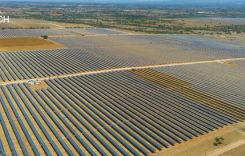
Ground-mounted stations contributed 410GW (59%) of new installations, with distributed PV reaching 286GW, driven by self-consumption models. Rising peak-hour PV penetration has led to increased curtailment and negative electricity prices, which impact project returns and Power Purchase Agreement (PPA) demand. Melodie de l’Epine, editor of the IEA PVPS report, notes that solar has entered a new era in which system integration, flexibility and energy storage are decisive factors.
Manufacturing overcapacity and low module prices in 2025 stimulated installation demand, but put pressure on manufacturer profits. Governments worldwide support domestic manufacturing through subsidies, trade measures, and industrial plans. India is a prime example of this kind of support, with Australia providing backing through its Solar Sunshot programme. Analysts highlight that the policies of 2025 focused on supply chain resilience, price pressure and adjustments to trade routes.

Scan the QR code to follow PVTIME official account on Wechat for latest news on PV+ES



 has released its 2025 global solar PV market report. The report confirms a record 698GW of new solar…)