
PVTIME – A Solar Tracker is a device that automatically adjusts the orientation of a solar panel or array to follow the sun’s path throughout the day. This maximizes the amount of sunlight that the panel receives, improving its energy efficiency and output. The rising popularity of solar power as a cost-effective energy source, driven by falling prices of solar PV panels, further supports the expansion of the solar tracker market.
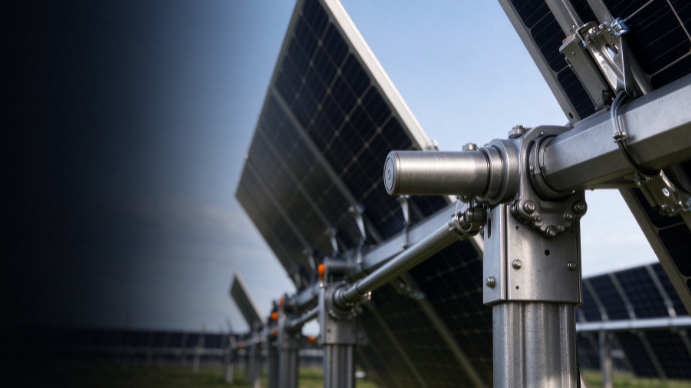
The solar tracker market is not merely growing. It is reshaping the fundamental economics of utility-scale solar. Wood Mackenzie tracked global tracker shipments reaching 134GWdc in 2025, a 19% year-on-year rise. Single-axis hardware remains the dominant choice, capable of boosting annual energy harvest by 22–27% versus fixed-tilt racks. In an era where land, permitting and grid interconnection have become scarcer than solar panels themselves, this simple mechanical upgrade has become one of the most powerful tools to squeeze more value out of every developed solar site.
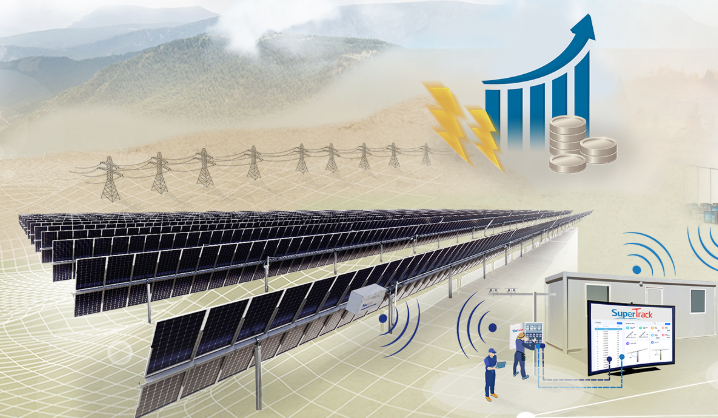
What’s Driving Market Growth?
● Growing utility-scale PV capacity additions requiring trackers for optimal yields.
● Government incentives, renewable portfolio rules and national clean-energy targets boosting solar installations.
● Advancements in motor drives, backtracking algorithms, weather-responsive controls and structural materials.
● Expanding networks of solar developers and EPC contractors streamlining large-site rollout.
● Measurable performance benefits, including higher energy harvest and reduced LCOE.
Key Market Insights:
▪️ Market Growth: Rising investment in utility-scale solar and tightening decarbonisation timelines accelerate tracker adoption, even as manufacturers navigate raw material swings and fragmented cross-border trade rules.
▪️ Technology Adoption: Single-axis solar trackers remain the mainstream choice for most large solar plants, supported by decades of field validation and a mature global supply base.
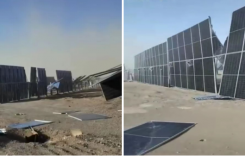
▪️ Smart Tracking Technologies: AI-backed backtracking, real-time weather integration and remote monitoring are no longer premium add-ons. They have become critical for balancing two competing priorities. These priorities are maximising power generation in calm sunshine, and safely stowing hardware to survive extreme wind, hail and storm events.
▪️ Competitive Landscape: Beneath the market’s upward curve, competition is creating a split between scalable global leaders and specialised regional players. This dynamic raises a quiet, important question. What competitive edge will endure when module prices stop falling?
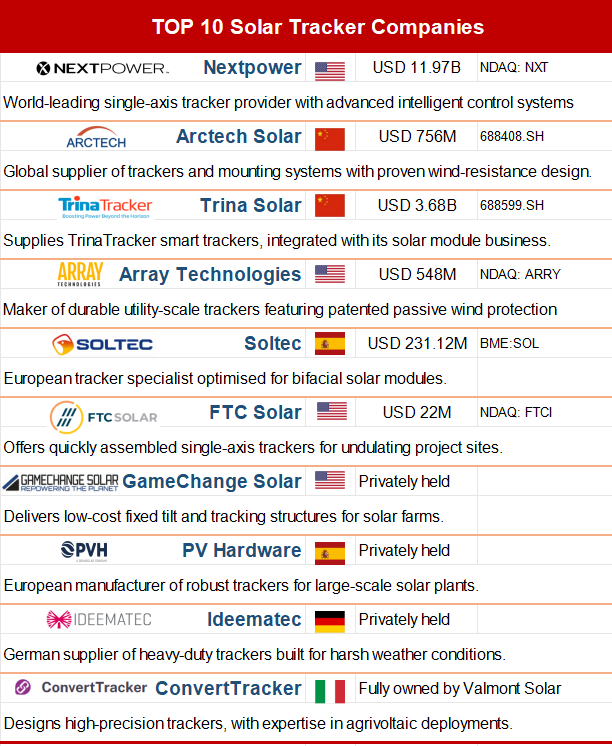
The graphic above outlines the top ten solar tracker suppliers, with listed valuations and core positioning for each participant. The global leader, Nextpower (NDAQ:NXT, USD 11.97B), has built its lead not only on metal structures, but on intelligent control software that adapts to terrain and atmospheric conditions. Arctech Solar (688408.SH, USD 756M) has carved out strong EMEA market share with wind-optimised tracker designs, addressing a top risk for developers in exposed regions. Trina Solar (688599.SH, USD 3.68B) leverages vertical integration, pairing its TrinaTracker line with in-house module production to deliver aligned, bankable packages for large PV plants.
Array Technologies (NDAQ:ARRY, USD 548M) stands out with its patented passive wind protection, an engineering solution that reduces reliance on active controls during grid outages. Spain’s Soltec (BME:SOL, USD 231.12M) has staked its reputation on trackers tuned specifically for bifacial panels, capturing reflected ground light in a market increasingly drawn to higher-yield bifacial setups. FTC Solar (NDAQ:FTCI, USD 22M) targets complex, undulating land parcels with rapid-install hardware, unlocking sites many competitors cannot serve economically.
Private players fill vital niche spaces. GameChange Solar and PV Hardware deliver cost-focused structures for price-sensitive utility farms. Germany’s Ideematec builds heavy-duty trackers engineered to endure heavy snow and high wind loads, catering to harsh-climate projects. ConvertTracker, previously Convert Italia, now sits fully within Valmont Solar’s portfolio, bringing high-precision hardware tailored for agrivoltaics. Agrivoltaics is a fast-growing segment where energy production must coexist with farming.
This landscape carries inherent tensions. Steel cost volatility, regional tariffs and local content rules continuously reshape margins and supply routes. As solar becomes cheaper, the industry’s next race is no longer just about building panels cheaply. It is about extracting every last kilowatt from constrained land, while designing systems resilient enough to withstand a less predictable climate. For developers, investors and engineers alike, the tracker market asks a pivotal question. As solar scales globally, who will turn raw sunlight into reliable, bankable power most efficiently?