
PVTIME – Germany achieved a record 43.2TWh of solar power generation during the first half of 2026, marking a 10% year-on-year increase, as verified by an analysis of energy-charts.info data by Fraunhofer ISE. EU solar output has grown by 254% cumulatively since 2015, reflecting a sustained regional upward trend in photovoltaic deployment.
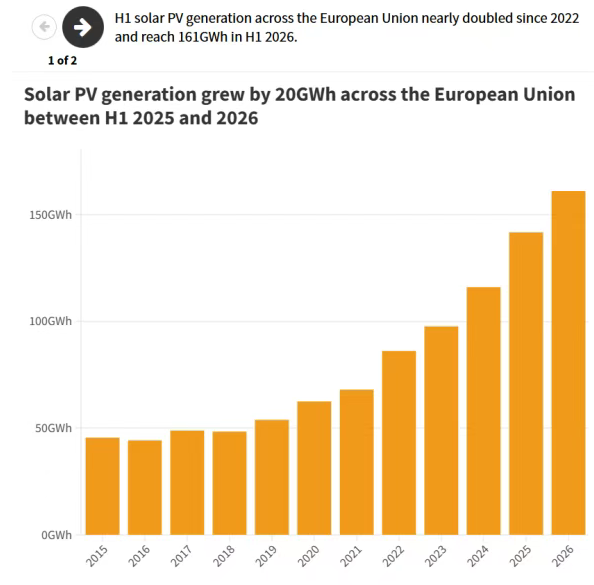
source: energy-charts.info
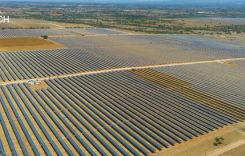
Solar energy accounted for 18.2% of Germany’s total power generation in the first half of 2026, which is a rise of 1.3 percentage points on the previous year. The country’s cumulative PV capacity increased from 118GW to 124.9GW, with a total of 7GW of new installations. Utility-scale, ground-mounted solar projects accounted for 3.5GW of the new capacity additions, followed by residential rooftop systems with 2.1GW and mid-range, 30–100kW PV projects with 1.1GW.
However, proposed revisions to Germany’s Renewable Energy Sources Act threaten the economic viability of small-scale rooftop solar systems, according to joint research by Fraunhofer ISE and Agora Energiewende. These regulatory changes could prompt property owners to install smaller PV arrays, thereby underutilising available rooftop space. BSW-Solar has previously indicated that further subsidy cuts would lead to a continued decline in residential solar uptake, following an initial fall in residential PV capacity in Q1 2026.
The increasing frequency of negative prices on Germany’s day-ahead electricity market is due to high solar and wind power output. Total solar curtailment reached almost 3GWh in the first half of 2026, with 58.2% of this surplus generation occurring during periods of negative pricing.
Fraunhofer ISE has highlighted a substantial intraday energy storage gap that restricts the efficient redistribution of excess power to periods of low generation. National battery storage capacity increased from 25.4GWh to 29.3GWh by the end of June 2026, with the volume of new large-scale storage commissioned in the first six months of 2026 exceeding that deployed in full in 2025. Increased intraday battery storage capacity has been shown to mitigate negative daytime electricity pricing and reduce sharp evening price volatility.
Market instability intensified in June 2026 when heatwaves drove up demand for cooling alongside reduced output from conventional power facilities, causing significant fluctuations in evening electricity market prices across Germany.

Scan the QR code to follow PVTIME official account on Wechat for latest news on PV+ES