
GALAXY Compute-Energy Synergy Solution Makes Its European Debut
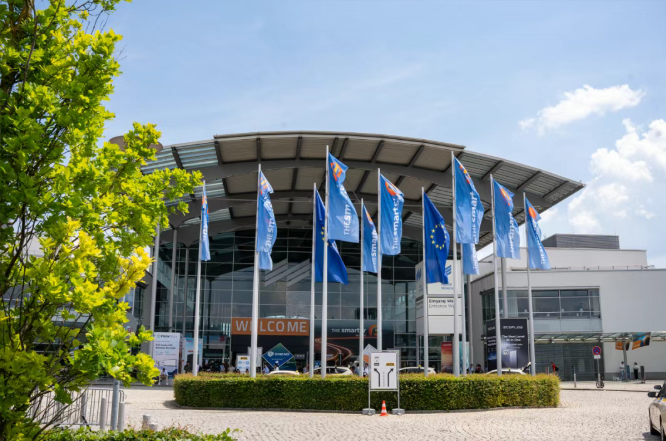
PVTIME – On 23 June, Intersolar Europe 2026 officially opened in Munich, marking the start of one of the flagship global exhibitions for the solar PV and energy storage sectors. As a BloombergNEF Tier 1 Energy Storage Manufacturer, LISINER exhibited its latest intelligent energy storage portfolio, designed to deliver smarter, more efficient and sustainable energy solutions for energy asset owners, operators and end users.
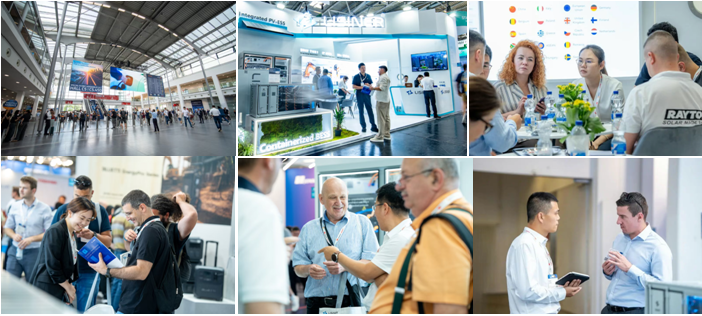

Europe’s energy transition is driving energy storage deployment across utility-scale, commercial, industrial and microgrid sites. Energy project developers and operators face tighter grid interconnection rules, persistent pressure on lifecycle energy costs and rigorous fire safety regulations, fuelling robust demand for storage systems tailored to European site-specific operating requirements.
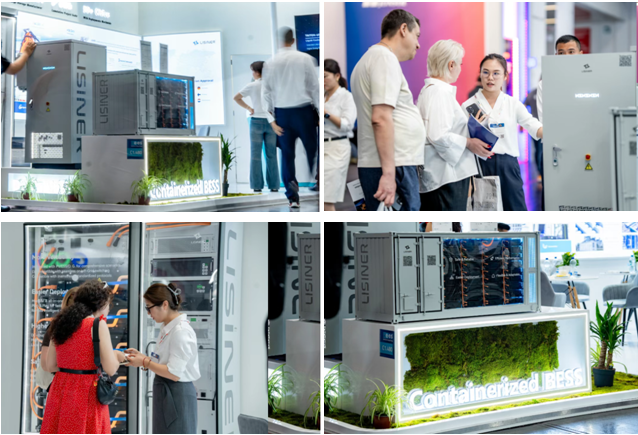
At this year’s Intersolar Europe 2026, LISINER unveiled its next-generation SOURCEFLOW® product portfolio, designed for utility-scale storage, commercial and industrial energy storage, and off-grid microgrid applications.

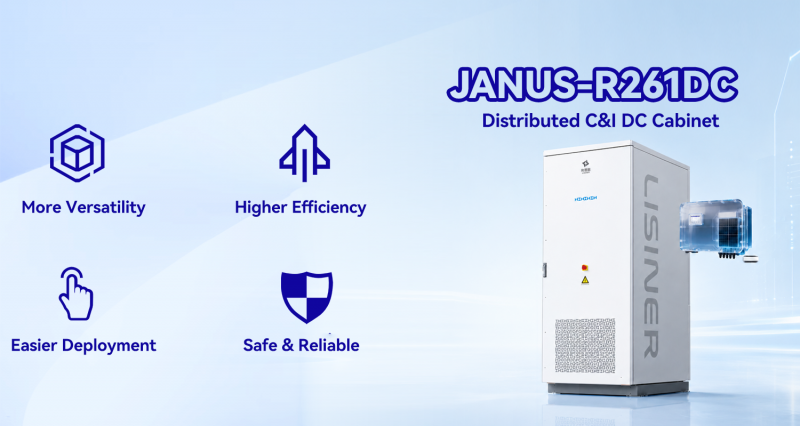
Distributed C&I DC cabinet JANUS-R261DC uses a DC-coupled architecture to reduce conversion losses from intermediate conversion stages, helping lower system-level LCOE. This modular platform supports flexible capacity expansion, from small commercial-scale kWh systems up to multi-MWh grid-connected installations. Pre-assembled and pre-tested at the factory, the unit integrates cloud-based remote monitoring and control tools to simplify on-site installation and reduce long-term O&M costs.

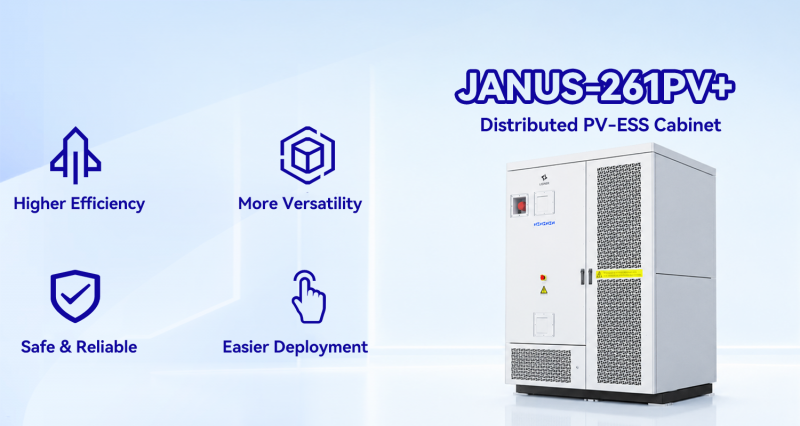
Tailored for diverse European commercial, industrial and remote microgrid applications, distributed PV-ESS cabinet JANUS-261PV+ integrates PV generation, battery storage and diesel generators under a unified control system. The solution supports smooth transitions between grid-connected and off-grid operation. It improves round-trip energy efficiency by 3–5 percentage points and supports mainstream European industrial communication protocols, enabling integration with local utilities and energy service providers across European markets.

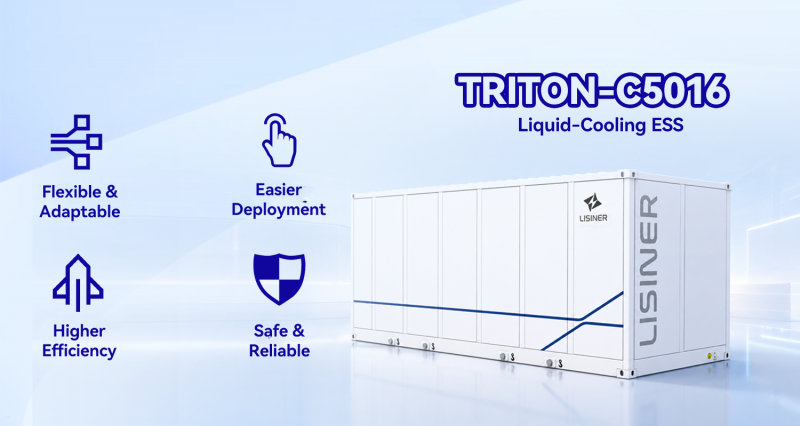
Developed for utility-scale front-of-meter storage and large-scale C&I energy storage applications, liquid-cooling ESS TRITON-C5016 stood out as a key highlight at the trade show. It features outstanding conversion efficiency, stable long-term operation, flexible site deployment and comprehensive multi-layer safety design. The system has been widely deployed in commercial projects across Asia, continental Europe and Africa, supporting grid stability and accelerating the integration of variable renewable power into national power systems.
With comprehensive scenario coverage and advanced localisation engineering capabilities, SOURCEFLOW® is quickly becoming a preferred storage hardware choice for a growing number of international energy asset owners.

LISINER’s product innovation is rooted in its long-term understanding of the evolving requirements of the global clean energy sector.
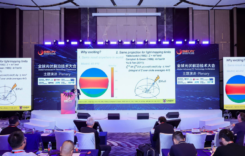
On 22 June, LISINER was invited to deliver a keynote presentation at the 4th Solar Energy Storage Future Germany 2026 conference. This high-level summit brought together representatives from Germany’s federal energy authorities, regional distribution network operators, leading renewable energy developers and institutional investors, who discussed emerging market trends and commercial opportunities in Europe’s evolving energy market.
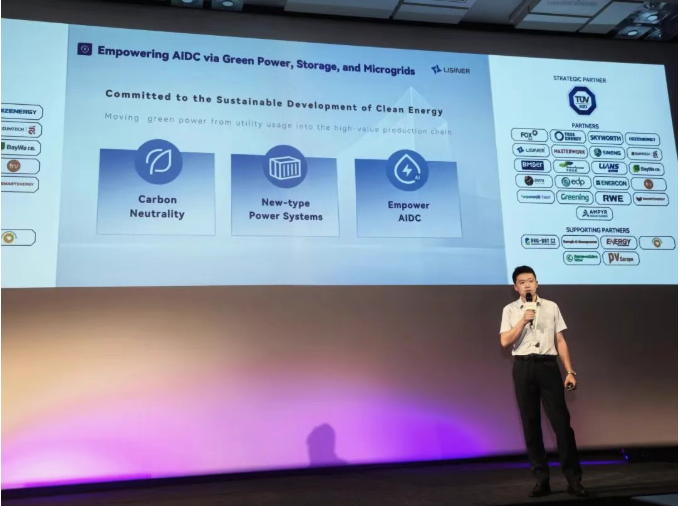
During the conference, LISINER formally launched its proprietary GALAXY Distributed Compute-Energy Synergy Solution to the European market, sparking widespread interest and follow-up technical discussions around deployment architecture and application scenarios among the delegates in attendance.
The exponential growth of generative artificial intelligence and infrastructure for large AI models has made the integration of green power and computing infrastructure a core strategic priority for global energy market participants. Moving beyond conventional solid-state transformer (SST) integration architectures, GALAXY provides a far more adaptable, small-footprint deployment model for coordination between computing loads and energy assets.

GALAXY leverages a streamlined DC architecture to drive capital expenditure reductions and measurable hardware efficiency gains. Its modular layout requires minimal site reconstruction and civil works, delivering high deployment adaptability and markedly lifting utilisation rates for distributed solar and storage assets.

While maintaining continuous operation for mission-critical digital computing infrastructure, GALAXY delivers millisecond-level coordinated power dispatch. Native integration between the DC backbone and on-site battery storage helps stabilise power supply under fluctuating loads, cutting operating energy costs and reducing operational emissions for AI data centre and digital infrastructure operators.

As the world’s first purpose-engineered distributed Compute-Energy Synergy Solution, GALAXY has been successfully deployed in a commercial-scale project at LISINER’s Poyang Zero-Carbon Industrial Park in Jiangxi Province, China. Following implementation of the GALAXY 800 architecture, the site’s distributed energy asset utilisation rate surpassed 95%.
This landmark project has validated the platform’s performance and scalability under complex hybrid microgrid operating conditions, delivering a proven, replicable blueprint for global commercial deployment.
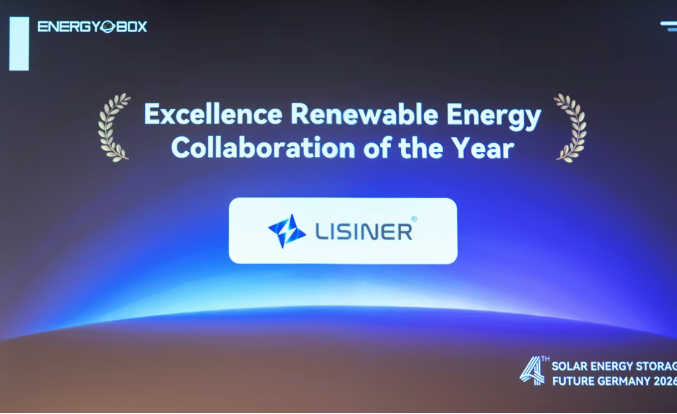
At the annual conference awards ceremony, LISINER won the Excellence Renewable Energy Collaboration of the Year award.
LISINER stays focused on delivering field-ready, reliable energy hardware amid the clean energy sector’s rapid digital transformation, translating advanced energy system designs into practical, replicable and long-life storage solutions.

These flagship solutions showcase LISINER’s end-to-end capabilities covering core R&D, intelligent automated manufacturing, renewable project investment, large-scale project construction and long-term asset operations.
Looking ahead, LISINER remains dedicated to global sustainable development and will deepen partnerships with global industry partners to roll out intelligent low-carbon energy systems across key markets. By enabling more precise coordination between renewable assets and digital computing infrastructure, LISINER aims to deliver tangible progress toward a more resilient, interconnected net-zero global energy system.