
PVTIME – Germany’s plug-and-play photovoltaic market, often called balcony PV, has grown rapidly, with more than 1.3 million systems officially registered.
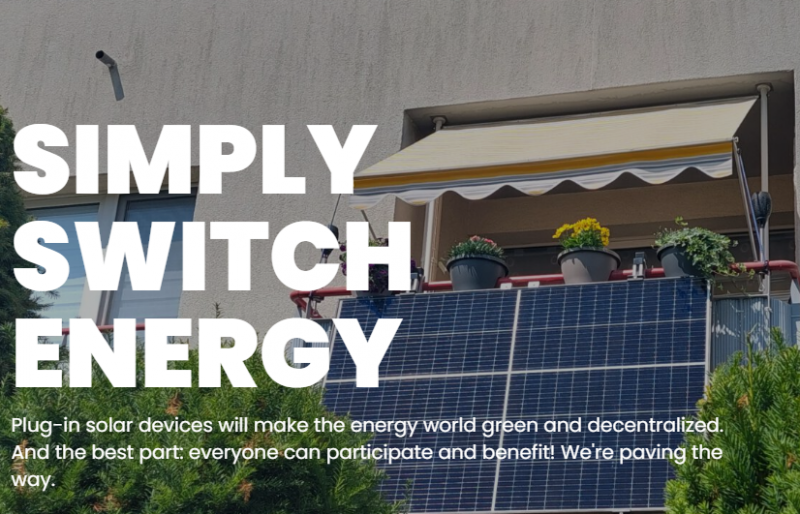
According to Craig Morris, CEO of Bundesverband Steckersolar e.V. (BVSS, German Association of Plug-in Solar), the technology’s reduced costs and simplified installation have enabled urban apartment dwellers and low-budget households to participate in the energy transition.
The market’s expansion is driven by microinverter technology, which enables individual PV modules to operate independently and improves performance in shaded conditions. Originally intended for balconies, these systems now cover rooftops, terraces, gardens and carports. While 1.3 million systems are officially registered, the actual number is higher due to unregistered installations.
A key advantage of plug-and-play PV systems is their cost-effectiveness: a typical two-module system costs around €500, which is far less than traditional rooftop PV systems, which often exceed $10,000. Such systems can meet half of a small household’s electricity needs. Morris clarifies that plug-and-play PV complements rather than competes with rooftop PV, offering a more affordable option for those unable to make large upfront investments.
Despite the industry’s positive prospects, it faces three core challenges: limited awareness among policymakers, slow standardisation, and resistance from apartment management. Morris notes that Germany has validated the safety of standard household plug connections and that mandatory electrician installation or special sockets would increase costs and hinder adoption. The model is gaining international traction, with the UK, Canada, Ireland and the US all exploring relevant policies.
Looking to the future, Morris recommends social leasing and pay-as-you-go (PAYGO) financing models in developing countries to improve affordability. He predicts that, by 2030, plug-and-play PV systems with energy storage will have become widespread across the globe, thereby boosting distributed generation and easing grid pressure.

Scan the QR code to follow PVTIME official account on Wechat for latest news on PV+ES