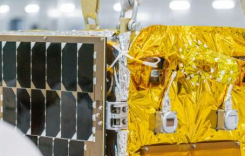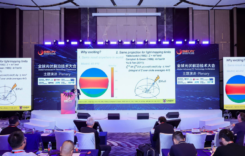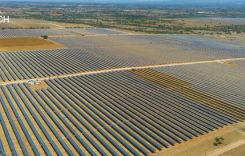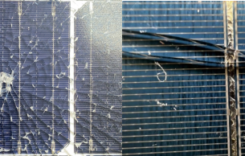

PVTIME – In January 2026, Singfilm Solar announced the successful delivery of the world’s first independently developed and manufactured Zenith Series flexible, ultra-thin perovskite photovoltaic modules.

Picture: Singfilm
These modules are set to be launched into space for the first time aboard a SpaceX mission.
With a thickness of just 50 microns, the modules’ cell substrates offer the key advantages of ultra-light weight, flexibility and high specific power. They are scheduled to lift off aboard a SpaceX Falcon rocket in Q4 of 2026, after which they will enter a one-year on-orbit service period in partnership with a leading international satellite manufacturer.
Deployed in a low Earth orbit around 500 kilometres above the surface, which consistent with commercial communication satellites such as Starlink, and the modules will undergo long-term monitoring in space. They will collect key performance data in harsh conditions to validate next-generation space energy systems and will be able to withstand orbital vacuum, extreme temperature cycles, low-orbit atomic oxygen corrosion and space radiation. This data will support the large-scale space application of perovskite photovoltaics and advance flexible PV technology towards engineering and commercialisation.
The mission will also carry an edge computing unit to demonstrate an independent power supply and computing on-orbit model. Ultra-thin flexible perovskite modules deployed in space in the future could provide continuous autonomous energy for on-board systems, enabling the creation of a distributed computing network in orbit and unlocking new possibilities for next-generation space infrastructure.

Scan the QR code to follow PVTIME official account on Wechat for latest news on PV+ES