

PVTIME – Led by the European Solar Manufacturing Council (ESMC), 23 European solar industry bodies have jointly urged the EU to tighten trade defences against unfair practices from non-market economies threatening the bloc’s photovoltaic supply chains.
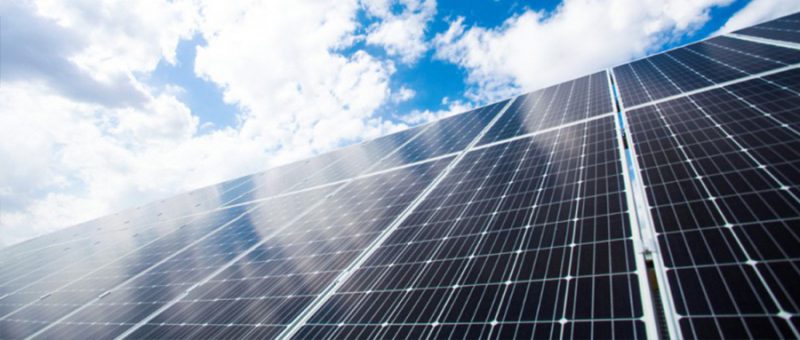
European solar manufacturers are urging the EU to support key revisions to WTO rules. These global standards underpin the EU’s internal trade regimes, and updates are vital to ensuring fair competition in international renewable energy supply chains.
The industry’s open letter sets out clear operational reforms for EU trade management. It calls for additional staffing at the European Commission’s Directorate-General for Trade (DG Trade) to speed up trade remedy investigations, and suggests new EU tools to address state-subsidised imports.
The signatories also want the EU to deploy the Foreign Subsidies Regulation more strategically in order to investigate and counter subsidised non-EU imports. They advocate the agile and proactive use of trade defence instruments, including anti-dumping and countervailing duties, to offset the fiscal benefits and state subsidies supporting overseas solar production and exports. The US has routinely used such measures to limit solar imports from China, India, Indonesia, Laos, and, as of 2026, certain African regions.
Although the letter does not name any specific countries or goods, the campaign is targeting low-cost Chinese PV imports that undercut European manufacturing prices.
According to data from the China Photovoltaic Industry Association, China’s global dominance in core solar components was verified in 2024, with the country producing 96.6% of global silicon wafers, 93.2% of polysilicon, and 92.3% of solar cells. Industry players worldwide are increasingly taking action to counter the competitive advantage of China’s state-supported PV production model.
In addition to the ongoing US trade remedy investigations into Chinese solar products, the EU is reviewing two new anti-dumping and countervailing duty applications against solar glass suppliers. The 37 Chinese firms and seven non-EU firms involved in the cases are exactly the same as those previously identified by the EU as having exported subsidised solar glass to Europe.
ESMC Secretary-General Christoph Podewils confirmed that fair market conditions are essential for the survival of Europe’s solar manufacturing sector. He emphasised that the EU has access to all the necessary trade defence instruments and that staffing shortages and slow enforcement are the only barriers to effective action. He added that the industry has already suffered as a result of delayed intervention.
The EU’s reliance on Chinese PV imports and China’s dominance of the global supply chain has stifled domestic solar manufacturing in Europe. While firms such as Holosolis are progressing with European manufacturing projects scheduled for completion in 2026, French PV manufacturer Carbon has scrapped plans for a 5GW domestic solar module plant, despite its previous efforts to drive the revival of European manufacturing.

Scan the QR code to follow PVTIME official account on Wechat for latest news on PV+ES

, 23 European solar industry bodies have jointly urged the EU to tighten trade defences against unfair practices from non-market economies…)