
PVTIME – In 2025, the US energy storage sector installed a record 57.6GWh of new battery capacity, representing the largest annual volume on record. This figure is 30% higher than in 2024 and over four times higher than the total installed capacity three years earlier.
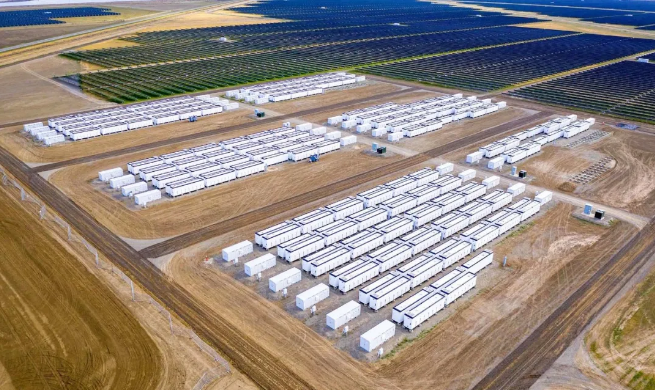
According to data from the Q1 2026 US Energy Storage Market Outlook, published by the Solar Energy Industries Association (SEIA) and Benchmark Mineral Intelligence, by the end of 2025 the US had installed 137GWh of utility-scale storage, 19GWh of commercial and industrial storage, and 9GWh of residential storage.
Total installed energy storage capacity is forecast to exceed 600GWh by 2030. Two-thirds of the utility-scale storage capacity added in 2025 was located in states won by President Trump, including nine of the top 15 states for new installations. Texas is set to overtake California as the largest US storage market in 2026.
Darren Van’t Hof, Interim President and Chief Executive Officer of SEIA, stated that this record-breaking year marks the beginning of the rise of storage as a foundation of the US energy system. He noted that storage reduces consumer costs, improves grid reliability, and maintains the power supply during outages, whether it is used with solar power or on a standalone basis. However, he added that without updated federal policy, US households would face higher electricity prices and a less secure energy system.
Standalone storage accounted for almost 30GWh of the additions in 2025, while solar-coupled storage contributed 20GWh. Residential storage grew by 3.1GWh, representing a 51% year-on-year increase. The expansion of virtual power plant schemes in states including Massachusetts, Texas, Arizona and Illinois has supported residential deployment, helping to manage peak demand and strengthen grid resilience.
In 2025, battery manufacturers reallocated production from electric vehicles to energy storage systems, adapting existing production lines and revising future plans. According to SEIA analysis, US lithium-ion battery production capacity for stationary storage exceeded 21GWh by the end of 2025. Domestic manufacturing facilities now have the capacity to produce 69.4GWh of battery storage systems.
Iola Hughes, Research Director at Benchmark Minerals, confirmed that the US storage market has entered a period of sustained large-scale deployment. She stated that policy, manufacturing and demand are combining to strengthen the sector’s role in managing peak demand, reducing price volatility and improving system resilience. Hughes added that storage is essential for the reliable and efficient expansion of the grid amid rising electricity demand from data centres and artificial intelligence infrastructure.

Scan the QR code to follow PVTIME official account on Wechat for latest news on PV+ES