
PVTIME – Trina Solar, a Chinese renewable energy enterprise, has withdrawn its application to develop the 200 MW/800 MWh Pleystowe battery energy storage scheme in Queensland, Australia. This withdrawal is a notable example of the increasing challenges faced by large-scale storage projects nationwide and has sparked significant international debate on compliance and community relations for overseas energy infrastructure programmes.
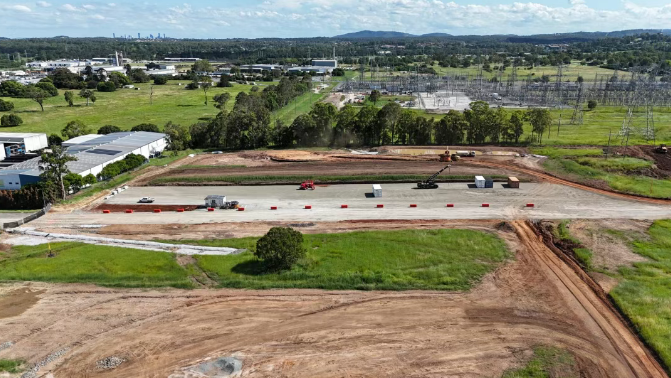
Located near Mackay, the project faced significant local opposition during the planning process, with the authorities receiving 733 formal objections and only three expressions of support. In response, the Queensland government invoked its call-in power, placing final project determination directly under the authority of the state planning minister and amending the standard approval process overseen by local authorities and judicial bodies. Ultimately, this intervention led Trina Solar to discontinue its application.
Similar planning disruptions have affected two other major energy storage projects in Queensland: Potentia Energy’s 300MW/1200MWh Capricorn project and Iberdrola’s 500MW Bundaberg scheme remain suspended amid comparable planning disputes. Key concerns include conflicting land use designations, operational noise emissions, fire safety protocols and potential ecological disruption. These issues have all emerged as critical barriers to project realisation.
Queensland has intensified its regulatory oversight of battery storage developments by applying the same rigorous assessment criteria as those used for wind and solar photovoltaic facilities. This has led to more complex evaluations and greater planning uncertainty, which is at odds with the objectives outlined in Australia’s 2025 Energy Roadmap. This plan aims to install 4.3GW of short-duration battery storage capacity by 2030. This misalignment leaves the sector facing concurrent pressures of regulatory compliance and social opposition.
Such planning challenges are not unique to Australia, but are mirrored by broader global constraints within the energy storage industry. Large-scale facilities in the United Kingdom and the United States have also encountered public opposition. In the US, 17 states and 150 local authorities have introduced restrictive policies, with New York State alone imposing 97 moratoriums on the construction of battery storage projects.
In Australia, the rapid expansion of residential solar and distributed storage systems has compounded these pressures, creating heightened competitive pressures for centralised, large-scale projects. The outcome of the Pleystowe application highlights a significant change in the global energy transition, where the success of large storage projects now depends on social coordination as well as technical and financial capacity.

Scan the QR code to follow PVTIME official account on Wechat for latest news on PV+ES