
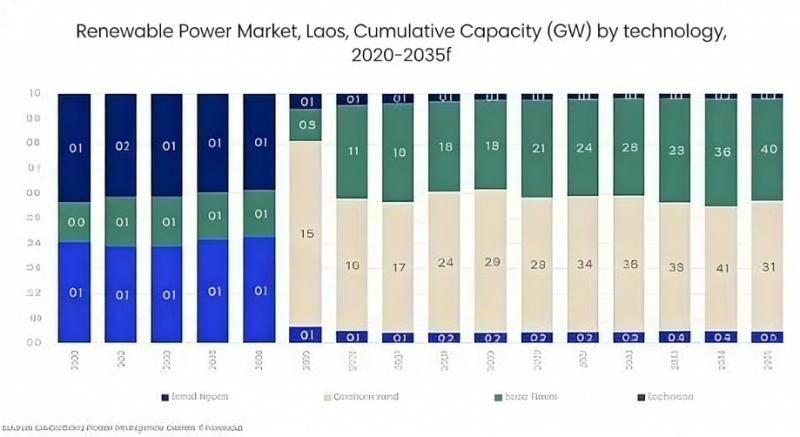
PVTIME – New analysis from GlobalData confirms that Laos is driving a strategic shift from coal-fired generation to clean energy, with installed solar PV capacity projected to reach 2.1GW by 2030 and 4GW by 2035. The landlocked Southeast Asian nation has set clear energy transition targets.
Picture: GlobalData
By 2030, 75% of the national electricity supply is expected to come from hydropower, with 11% coming from renewables, predominantly wind and solar. This is supported by a conditional target of installing 1GW of combined wind and solar power.
GlobalData analysts assess that Laos holds significant renewable energy potential. Solar capacity is expected to grow from 300MW in 2025 to 4GW in 2035, while onshore wind capacity is predicted to surge from 1.5GW to 5.1GW over the same period. Onshore wind is set to dominate the renewable energy landscape, delivering a compound annual growth rate (CAGR) of 17.1% between 2025 and 2035, reaching a total capacity of 9.8GW.
Laos has a daily global horizontal irradiance (GHI) of around 4.4kWh/m², but geographical constraints restrict the deployment of large-scale ground-mounted solar installations. Floating solar installations on reservoirs are therefore identified as a critical growth avenue. Data from the US National Renewable Energy Laboratory (NREL) estimates 825GW of floating solar potential across ten Southeast Asian countries, with Laos and Malaysia ranking highest.
GlobalData power analyst Attaurrahman Ojindaram confirmed that hydropower will remain central to Laos’ energy structure, with the government planning to add 13GW of hydropower capacity by 2030. In 2025, wind power accounted for 74.3% of the country’s renewable energy mix, compared to just 12.8% for solar power, indicating substantial room for expansion of the solar sector.

Scan the QR code to follow PVTIME official account on Wechat for latest news on PV+ES