

PVTIME – The insolvency administrators of the German solar glass manufacturer Glasmanufaktur Brandenburg GmbH (GMB) have announced that the company will cease all operations in March 2026, having failed to secure a potential investor.
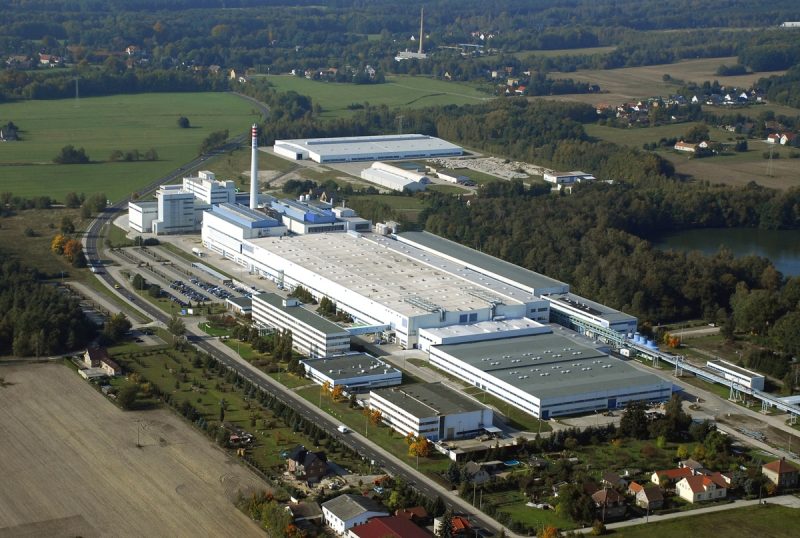
GMB filed for insolvency on 4 July this year, and administrators have confirmed that the remaining 215 employees will be made redundant from 1 December. Brandenburg’s Minister of Economic Affairs, Daniel Keller, described this development as catastrophic for energy production, adding that the regional government will provide full support to those affected.
Signs of decline emerged in January 2025, when plummeting orders forced the introduction of short-time working schemes. The company incurred monthly losses of €900,000 (around 7.48 million yuan), and capacity utilisation at its 350-tonne-per-day facility continued to fall. The prior insolvency of key client Meyer Burger, a German module maker, further worsened order shortages.
Industry data cites two core causes: the first is the contraction of the European PV market, which is the first in a decade, with SolarPower Europe projecting 64.2GW of new EU installations in 2025, which is a 1.4% year-on-year drop. The second is that Germany’s industrial natural gas prices are three times higher than in the US, which undermines GMB’s competitiveness against Asian manufacturers, given the high energy intensity of solar glass production.
The closure will deepen Europe’s reliance on solar glass imports, which already account for over 70% of the market, with 62% originating from China. This figure is expected to reach 100%, as firms like Saint-Gobain only retain auxiliary operations without large-scale production capacity. GMB joins the ranks of over 20 European PV companies that have either collapsed or scaled back production this year, leaving sectors such as polysilicon and wafers nearly non-existent locally.
Although the EU’s Net Zero Industry Act requires that 40% of renewable energy projects use domestic modules by 2030, the implementation of this policy has been slow. Industry analysts warn that short-term reconstruction of solar glass capacity is unfeasible, thereby exacerbating the risk of supply chain ‘hollowing’.
The Mining, Chemicals and Energy Trade Union (IG BCE) has expressed deep disappointment, noting that a potential investor withdrew due to failed financing. IG BCE Lausitz deputy district manager Anis Ben Rhouma criticised the former parent company, the Indian firm Borosil, for shirking responsibility, and called for a staff protest at GMB’s Tschernitz headquarters on Monday.

Scan the QR code to follow PVTIME official account on Wechat for latest news on PV+ES



 have announced that the company will cease all operations in March 2026, having failed to…)