
PVTIME – German polysilicon manufacturer Wacker Chemie has confirmed a decline in sales and earnings for its polysilicon division in Q1 2026. Underperformance in the solar-grade polysilicon segment was identified as the main cause. Polysilicon sales in Q1 2026 dropped 8% year-on-year to €226 million ($264.2 million), down from €245 million in Q1 2025. Meanwhile, EBITDA remained stable at €23 million ($26.8 million), compared to €24 million in the same period last year.
While the polysilicon business contracted, the Wacker Group’s overall performance showed mixed results. Group sales decreased year-on-year to €1.41 billion, but EBITDA increased year-on-year and quarter-on-quarter to €173 million, supported by advance customer orders triggered by the conflict in the Middle East. The group’s total revenue for Q1 2026 was €15 million.
Despite challenging market conditions, the company notes a solid Q1 performance, attributing improved earnings to cost-saving measures and advance customer orders. As part of a restructuring and cost-saving initiative launched in 2025, Wacker intends to refocus its polysilicon business on the semiconductor market and move away from solar-grade polysilicon, according to President and CEO Christian Hartel.
Mr Hartel highlights that weak demand persists across key customer sectors, with the conflict in the Middle East exacerbating cost pressures through volatility in the energy, raw materials and logistics markets. The solar-grade polysilicon industry has long been affected by oversupply and low prices, and these challenges intensified in Q1 2026.
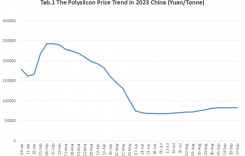
Prices across the PV industry chain have remained sluggish in Q1 2026, with sharp falls in polysilicon and wafer prices, and shrinking end-market demand putting pressure on corporate revenues and margins. Third-party data shows that the average transaction price of N-type polysilicon feedstock fell from RMB 59,200 per tonne in early January to RMB 40,500 per tonne by late March, a decline of around 24.7% in Q1.
Despite 2025 production rate controls, major Chinese polysilicon producers have reported financial losses due to sustained low selling prices. Daqo’s Q1 results, released last week, show a plummeting revenue from $221.7 million in Q4 2025 to $26.7 million. This resulted in a gross loss of $139.4 million, compared to a profit of $15.4 million in the previous quarter. Daqo’s polysilicon sales dropped by 88% year-on-year to 4,500 tonnes, driven by slower deliveries amid intensified domestic price competition.
Tongwei, a leader in integrated PV, also suffered, with operating income falling 23.9% year-on-year to RMB 12.125 billion (down from RMB 15.933 billion) and reporting a net loss of RMB 2.56 billion in Q1. The company attributes this decline to a reduction in its business scale, reflecting weak downstream demand and adjustments in industry production.
In an attempt to address the issue of oversupply, major Chinese producers have been working together to cut output since mid-2025 in an effort to boost prices, while relevant authorities have been holding official industry meetings to mitigate market imbalances.

Scan the QR code to follow PVTIME official account on Wechat for latest news on PV+ES