

PVTIME – India’s Central Electricity Authority (CEA) has published its Vision Report on the Power System 2030, which outlines a diverse roadmap for the country’s energy storage technologies. The report sets ambitious expansion targets for pumped storage and identifies clear growth opportunities for cutting-edge solutions, including flow batteries and grid-forming battery energy storage systems (BESS).
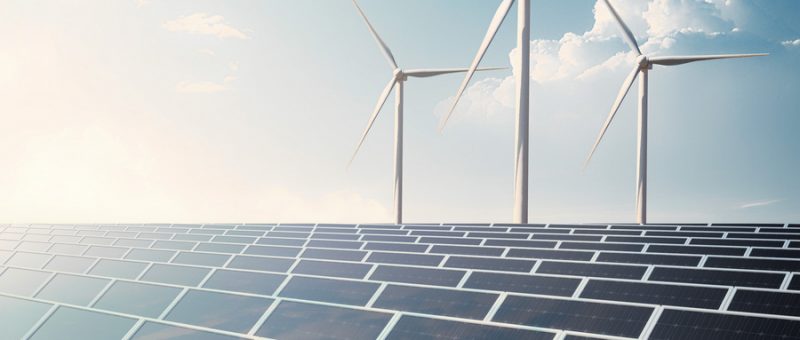
The document explicitly states that India plans to add 100GW of installed pumped storage capacity by 2030. This substantial enhancement to existing plans is intended to provide the national grid with long-duration, large-capacity energy storage support and accommodate the rapid growth of wind and solar electricity generation.
India is also accelerating its focus on advanced energy storage solutions beyond traditional pumped storage. Bharat Heavy Electricals Limited (BHEL) and the Swiss energy storage company Leclanché have announced a joint project to develop a 100MWh vanadium flow battery in Panchpur, Maharashtra.
Demonstrating the country’s active exploration of flow battery technology alongside lithium-ion batteries for long-duration storage, the project is one of India’s largest planned flow battery projects to date. Flow batteries offer benefits in terms of safety and lifespan, and the project will verify their value in terms of grid peak shaving, frequency regulation, and renewable energy integration.
Grid-forming Battery Energy Storage Systems (Grid-forming BESS) are another key focus of the CEA report. The rising penetration of renewable energy in India has exacerbated the issue of declining system inertia due to the retirement of traditional synchronous generators, making grid-forming storage, with its voltage and frequency support capabilities, a vital solution for grid stability.
The Indian Ministry of Power is set to introduce targeted policies and market mechanisms to encourage research, development and deployment of grid-forming storage. Several international energy storage providers are already establishing a presence in India, seeking to form partnerships with local enterprises in order to deliver demonstration projects.
Strong policy support and market demand are driving India’s energy storage growth. According to data from the Ministry of New and Renewable Energy (MNRE), approximately 2GWh of advanced energy storage projects were operational at the beginning of 2026. A CEA report states that cumulative storage capacity must reach 48.5GWh by 2030 in order to support India’s target of generating 500GW of non-fossil energy.
In order to achieve this, the Indian government is enhancing energy storage business models and pricing mechanisms. The Central Electricity Regulatory Commission (CERC) has revised its rules to enable storage systems to participate in auxiliary service markets, including frequency regulation, peak shaving, and backup power. The commission has also clarified the technical standards for grid connection for storage stations.
Industry analysts note that India’s energy storage market is transitioning from a policy-driven phase to a period of large-scale development. Pumped storage is expected to form the foundation of long-duration storage due to its maturity and high capacity, while flow batteries and grid-forming systems are set to gain traction in specific scenarios, helping to build a more diverse and resilient storage system.

Scan the QR code to follow PVTIME official account on Wechat for latest news on PV+ES



 has published its Vision Report on the Power System 2030, which outlines a diverse roadmap for the country’s energy storage technologies. The report…)