
PVTIME – The International Energy Agency has released a thematic report, Accelerating Renewable Energy Growth in ASEAN, which analyses the key obstacles to expanding renewable energy power capacity in the region and outlines actionable policy approaches based on global practices.

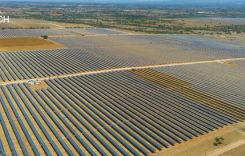
The report assesses renewable energy auction mechanisms already implemented in Malaysia, the Philippines, and other ASEAN countries, noting that such auctions are projected to account for around 60% of global renewable energy capacity additions by 2030. A key finding is that ASEAN’s installed solar photovoltaic capacity surged sixfold between 2018 and 2024, reaching almost 35GW.
However, despite this growth, renewables accounted for only 25% of the region’s total electricity supply in 2024. Except for Vietnam, the combined share of photovoltaic and wind power in total electricity generation remains below 5% across all other ASEAN member states. Eight out of 11 member states have established net zero emission targets, and the region aims to achieve three milestones by 2030 under the ASEAN Plan of Action for Energy Cooperation 2026–2030: renewables making up 30% of total primary energy supply, 45% of total installed capacity, and a 40% reduction in energy intensity compared to 2005 levels.
The report identifies three core challenges to scaling up renewable energy installations in ASEAN. Firstly, there are rising costs and escalating investment uncertainty, with the levelised cost of electricity for solar and onshore wind remaining above the global average due to high upfront and financing costs. The region’s small and fragmented market limits competition and hinders cost reduction, while inadequate risk-sharing mechanisms in Power Purchase Agreements further amplify risks, including: unclear national energy strategy implementation; insufficient policy support for long-term returns; utilities’ concerns over Power Purchase Agreement risks; administrative barriers for corporate deals; and misalignment between foreign ownership restrictions, domestic content requirements, and project plans.
Secondly, there is power system inflexibility and rigid fossil energy contracts. The International Energy Agency categorises the integration of variable renewable energy into the grid into six phases, and some ASEAN countries are expected to enter phases three and four by 2035, which will bring significant challenges to system stability. While countries such as Italy and Australia have mature, high variable renewable energy penetration, ASEAN faces unique constraints. Indonesia, Thailand and Vietnam have large coal-fired fleets with an average age of 15 years, which could provide peak shaving capacity, but this potential is restricted by inflexible Power Purchase Agreements and fuel contracts with take-or-pay clauses. Other factors include the dominance of inflexible, long-term power purchase agreements in markets such as Thailand’s thermal surplus regions, insufficient incentives for flexibility and ancillary services, and limited support for distributed photovoltaics. This has resulted in only around 16GW of regional capacity by 2024, due to utility concerns over the revenue impact of self-consumption.
Thirdly, there are barriers to project permitting, community engagement and data access. ASEAN shares global challenges, including lengthy approval processes, complex administrative requirements, low transparency, weak time constraints, and overlapping departmental responsibilities, which are exacerbated by inadequate community engagement, leading to resistance against large-scale or environmentally sensitive projects. Despite possessing world-class geothermal resources, which are projected to contribute nearly 30% of global additions by 2030, ASEAN’s geothermal development is hindered by insufficient public data and high early-stage risks, such as uncertain drilling success rates, which drive up financing costs and delay timelines.
The report highlights renewable energy auctions as a key market-based tool for overcoming these issues, with core advantages including efficient deployment, clarified government policy, reduced costs through competition, and stable, long-term revenue guarantees for developers. Between 2019 and 2025, cumulative winning projects from ASEAN auctions exceeded 37GW, with photovoltaics accounting for 24GW nearly two-thirds and auctions are anticipated to drive over 50% of large-scale renewable capacity additions by 2030, aligning with European trends.
However, the report highlights several implementation challenges, including insufficient market participation due to complex tender rules, opaque processes, inadequate information disclosure, and stringent local content requirements, all of which suppress competition and delay deployment. Winning projects often encounter delays in obtaining grid connection approval and acquiring land, while inflation and exchange rate volatility impact the economics. Furthermore, auctions are overly concentrated on photovoltaic and wind energy, creating grid pressure, and the region’s dominant pay-as-produced model, with long-term contracts, rigidifies markets, restricting flexible, market-based contracts.
The report highlights that ASEAN still faces multiple practical challenges in scaling up renewable energy installations, and that future analysis will focus on policy solutions and priority actions to accelerate the region’s energy transition.

Scan the QR code to follow PVTIME official account on Wechat for latest news on PV+ES