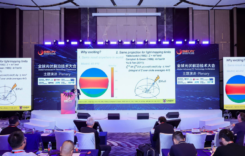

PVTIME – On 12 January 2026, Huawei hosted a launch event for its Top 10 Intelligent PV Trends 2026. The event centred on the themes of full scenario grid integration, unlocking AI potential, delivering high quality standards, and accelerating the adoption of wind, solar, and storage technologies as the main power sources.
Zhong Mingming, the company’s Intelligent PV Business Vice President and Chief Marketing Officer, officially released the top 10 trends alongside a supporting white paper. This publication provides forward-looking insights and practical pathways to enable wind, solar and storage to evolve into the main power sources for the new power system, thereby supporting high-quality development across the industry.
Mr Zhong explained that the wind, solar and storage sector has experienced leapfrog growth over the past decade. However, the rising penetration of new energy sources has triggered balance and stability issues on both the generation and consumption sides of the power system. The industry now stands at a new historical juncture as it enters a phase of deepening value, shifting its focus from individual innovations to integrated ones. Drawing on its market insights and understanding of the future PV and storage sector, Huawei has identified ten key trends, comprising four scenario-based application trends and six technology application trends.
1 The coordination of wind, solar and storage will transform new energy into predictable, controllable and stable power sources. Future large-scale wind, solar and storage bases must feature two core pillars: stable controllability and cost controllability. They must also incorporate three essential elements: 100% new energy independent operation; full-link intelligent coordination; and full-lifecycle safety and high-quality performance. This will enable them to provide a predictable and controllable stable power supply.
2 Ubiquitous grid-forming energy storage will become a key pillar for grid stability and balance. When deployed widely, it will stabilise fluctuations in new energy generation, ensuring a consistent power supply, while also participating in energy market transactions and providing auxiliary services such as frequency and peak regulation. This will generate sustained economic value for users and support the development of a safer, more flexible and efficient new power system.
3 Source-grid-load storage coordination will drive a shift in power supply models towards regional autonomy and global coordination. AI-powered intelligent dispatching technology will enable in-depth linkage and efficient collaboration across power sources, grids, loads and storage.
4 Residential PV storage scenarios will spearhead the transition from AI-enabled to AI-native systems, delivering optimal power consumption experiences. AI will be fully integrated into the design, operation, and maintenance stages, upgrading the basic demand for maximum self-consumption to a proactive strategy focused on the optimal user experience.
5 High-frequency and high-density technologies will drive continuous improvements in the power density of PV storage equipment. Technological innovations, from components to systems, combined with advanced heat dissipation and high-frequency material technologies, will increase the power density of PV inverters and energy storage power conversion systems (PCS) by over 40% in the coming years, thereby improving the quality and efficiency of PV storage systems.
6 High-voltage and high-reliability solutions will drive sustained reductions in the levelised cost of electricity. Upgrades to the voltage resistance capabilities of key components and insulating materials will accelerate the trend towards higher voltages. Safety protection for equipment and systems will shift from a passive response to active prevention and control, ensuring safety and reliability under high-voltage conditions and advancing the commercialisation of high-voltage technologies while significantly reducing the levelised cost of electricity for PV systems.
7 System-level battery management is essential for the safe and stable operation of energy storage systems, since batteries alone do not constitute a complete system. Accurate and reliable monitoring and management of energy storage systems, from cell to system level, using power electronics, cloud computing, and AI digital technologies, is critical. This approach delivers higher discharge capacity, enhanced safety, longer lifespans, and simplified operation and maintenance, all of which have become fundamental requirements for high-quality energy storage.
8 The maturing ecosystem of new energy grid-forming technologies will accelerate the development of the new power system. Grid-forming energy storage is evolving from a passive follower to an active builder of grid stability. Grid-forming technology is moving beyond single-function applications to enter a new phase of systematic, in-depth integration, built on three pillars: high-performance hardware, grid-forming algorithms, and intelligent technologies. Hierarchical deepening and cross-integration will build capabilities to meet stability requirements across all scenarios, operating conditions, and time domains.
9 Intelligent agents will empower new energy power plants to transition to autonomous operation. The growing integration of intelligent agents into new energy power plants will enable autonomous operation through cloud-edge collaboration.
10 The energy storage industry will enter a new phase of quantifiable safety, prompting improvements in safety capabilities. Rather than testing individual samples, energy storage safety evaluations will cover the full lifecycle of systems through systematic assessments. Clear safety standards will be defined using quantitative indicators, and hierarchical requirements will drive the development of improved safety capabilities. This will address key industry issues, including ambiguous safety boundaries and inadequate targeted prevention and control measures, thereby establishing a robust safety foundation for the healthy development of the energy storage industry.
Full scenario grid integration, which unlocks the potential of AI and delivers high-quality standards, represents not just a technological leap, but also a profound commitment to sustainable development. Huawei aims to collaborate with industry partners and stakeholders, providing insights and innovations to lead the sector, accelerate the transition of wind, solar, and storage to become the main power sources, and bring green power to thousands of industries and households, building a greener and better future.
Scan the QR code to follow PVTIME official account on Wechat for latest news on PV+ES