
PVTIME – South Korea has set out an ambitious renewable energy strategy, aiming to increase its operational renewable energy capacity from 37GW to 100GW by the end of the decade. The plan was submitted to the government by Kim Seong-hwan, the Minister for Climate, Energy and the Environment.
Eunhae Jeong, Director-General for International Affairs at the Ministry of Climate, Energy and Environment, has stated that renewable energy, including solar, wind, hydro and biofuels, will increase from accounting for 10.8% of national power generation in 2025 to accounting for 20% by 2030.
Minister Kim emphasised the need to develop an energy system that is resilient to external shocks, including conflicts in the Middle East. In the previous year, fossil fuels made up 55.2% of South Korea’s energy mix. The new plan follows a tender in 2024 for 2.8GW of new renewable capacity.
South Korea aims to become a leading green manufacturing nation by achieving energy independence, carbon neutrality, and industrial competitiveness. In 2025, a $22.9 million investment in solar cell and module research was announced. This builds on the 11th Basic Plan for Long-Term Power Supply and Demand, which aims to achieve 121.9GW of renewable capacity by 2038.
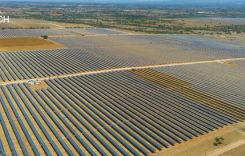
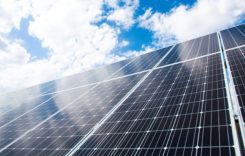
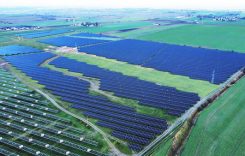
Alongside expanded solar and wind deployment, the government plans to phase out 60 operational coal-fired power plants by 2040. The greater use of energy storage systems will facilitate the transition from centralised to decentralised power systems. Solar capacity will be expanded across industrial rooftops, agricultural sites, and floating facilities, with an increase in flexible resources, including energy storage and pumped hydro.

Scan the QR code to follow PVTIME official account on Wechat for latest news on PV+ES