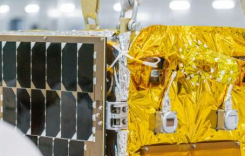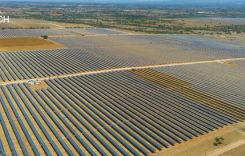

PVTIME – JinkoSolar has introduced anti-glare, low-reflectivity photovoltaic modules designed for large-scale transport scenarios, such as airports, motorways, and elevated noise barriers.

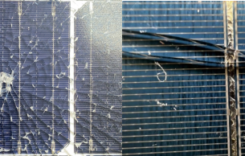
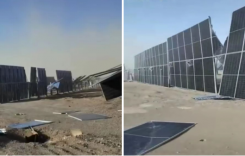
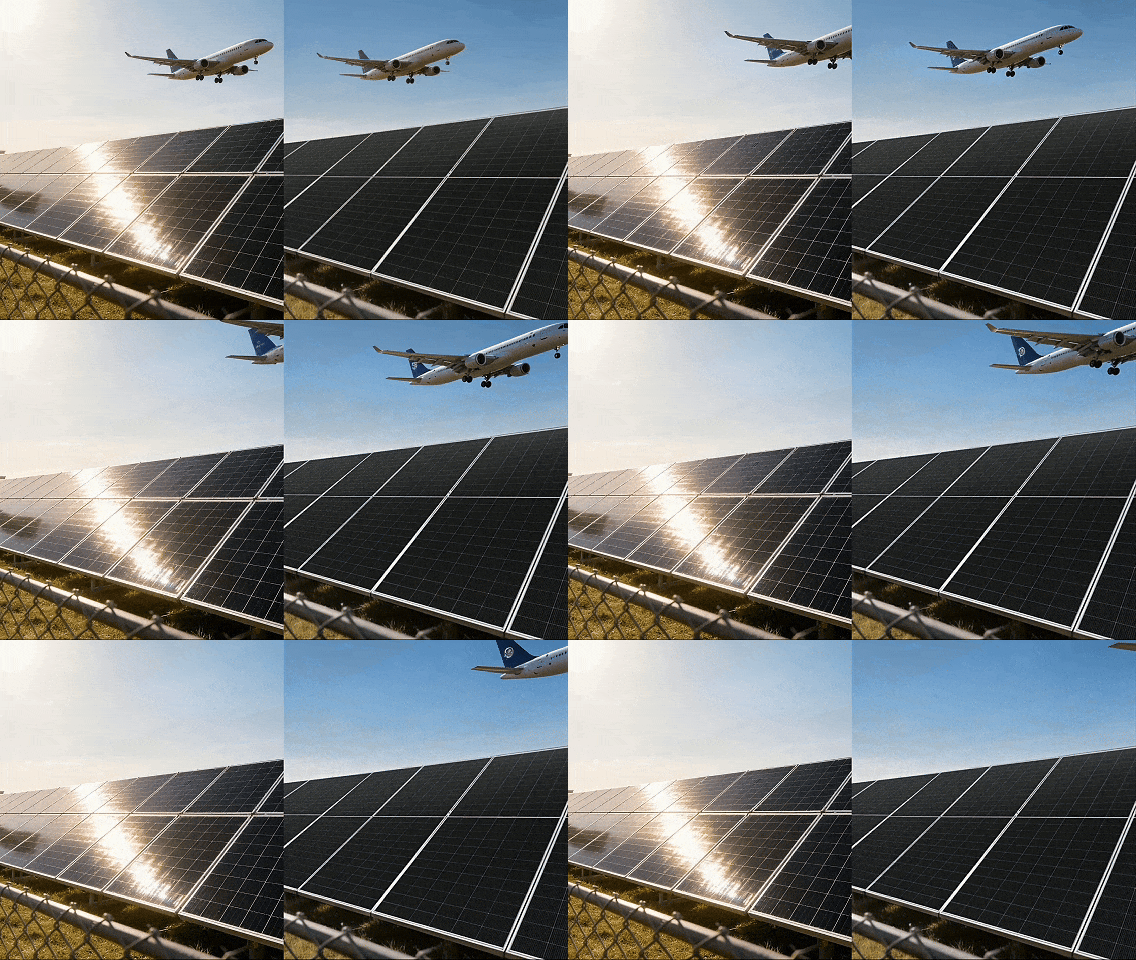
Left: common module Right: anti-glare module
This product reduces the glare and reflection of photovoltaic modules, thereby minimising visual interference for pilots and drivers. Positioned to deliver the highest anti-glare rating and top-tier certification standards, it provides a key green solution for deep decarbonisation in the transport sector, marking a new, safety-focused, standards-led era for photovoltaic integration with transport infrastructure.
Unlike conventional anti-glare modules, this transport-focused product features a textured surface, an anti-reflective coating on the glass and a specialised layer. This design effectively scatters light to eliminate harsh glare and significantly reduce environmental light reflection, while maintaining high glass transmittance and bifaciality to preserve the modules’ strong power generation efficiency across all lighting conditions.
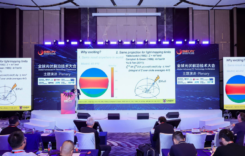
The modules offer outstanding anti-glare performance, with glare intensity reduced by over 80% across all incidence angles, which are well below the levels of conventional modules. They meet the strict glare rating requirement of GR≤50 set out in China’s Technical Requirements for Apron Floodlighting at Civil Airports, as well as the specifications of JT/T 646-2017 for highway noise barriers. This makes them suitable for use in all transport scenarios. Their reflectivity is lowered by over 85% compared to standard modules, while retaining equivalent glass transmittance.

The product has authoritative certifications from TÜV Rheinland and Swiss SPF, and is undergoing testing and certification at the China Photovoltaic Product Quality Supervision and Inspection Centre. Set to become China’s first photovoltaic anti-glare product to hold three authoritative certifications, it represents the industry’s highest technical standards in certification coverage. Based on the proven Tiger Neo series, the modules are fully compatible with existing installation systems in terms of size and method, and no additional modification costs are incurred. With a high bifacial rate of 85±5%, they deliver a 3–5% increase in annual power generation for vertical installations, such as highway noise barriers, while balancing operational safety with enhanced energy efficiency.
Decarbonisation in the transport sector is an urgent priority under national carbon neutrality targets. Airports typically consume over 100 million kWh of electricity annually and there is vast unused space on highway slopes and noise barriers, making photovoltaic power an ideal solution for carbon-free operations. However, conventional photovoltaic modules create specular reflection glare that can cause momentary visual interference for pilots and drivers, potentially leading to safety incidents and hindering large-scale deployment of photovoltaic systems in transport scenarios.
China has a theoretical photovoltaic installation potential of over 10GW at airports by 2030, with most areas classified as glare-sensitive. The market scale for anti-glare photovoltaic modules for highways is also set to reach 10GW. The launch of this green solution will shift the focus of photovoltaic deployment in large-scale transport scenarios from maximising installation to ensuring it is safe and intelligent.

Scan the QR code to follow PVTIME official account on Wechat for latest news on PV+ES