
PVTIME – Dutch start-up Lightyear has announced a collaboration with Nissan to integrate its advanced solar charging technology into a demonstration vehicle. The company regards this as a pivotal step in bringing its solar solutions to the commercial market. Lightyear has been advancing the research, development and refinement of its solar vehicle charging technology for some time, partnering with multiple car manufacturers to showcase the capabilities of its system.
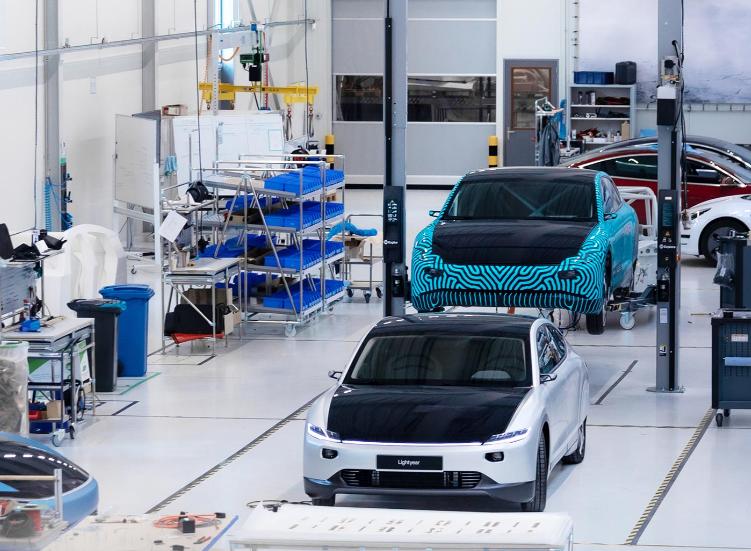
Picture: Lightyear
Previously, Lightyear attempted to integrate solar panels into vehicle bodies for commercialisation, but failed to achieve mass production, resulting in the company’s bankruptcy. Since new leadership took over in 2023, the company has shifted its core focus to solar charging technology, while continuing to manufacture purpose-built automotive solar panels for specific applications at its base in the Netherlands.
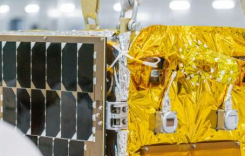
This partnership has resulted in the Nissan Ariya solar concept car, featuring 3.8m² of custom solar panels supplied by Lightyear on its polymer bonnet, roof, and glass tailgate. These panels use high-efficiency photovoltaic cells to convert sunlight directly into direct current electricity. This electricity is managed via an optimised power controller to enhance overall energy availability and reduce reliance on external charging.
Tests on the demonstration vehicle show that it can generate 0.5kWh of solar power over a two-hour, 80-kilometre journey, providing an additional driving range of up to three kilometres at no extra cost or charging time. Under clear, sunny conditions, the panels can produce enough clean energy to increase the vehicle’s range by up to 23 kilometres. On an annual basis, this equates to an average daily range increase of 10.2 kilometres in London, 18.9 kilometres in New Delhi, and 21.2 kilometres in Dubai.
Last summer, Lightyear’s chief executive officer, Bonna Newman, noted that aesthetic design is a key consideration in the development of any solar-powered vehicle. Following the unveiling of the Solar Ariya, she emphasised that collaborating with a major player in the automotive industry showcases the tangible advantages of Lightyear’s technology for electric vehicle owners and drivers, reducing their dependence on the power grid and charging stations. She added that Lightyear’s ultimate goal is to establish solar power as a meaningful and scalable component of the electric vehicle industry.
Tests also indicate that, depending on usage patterns and conditions, charging frequency can be reduced by between 35% and 65%. While the system is not designed to replace plug-in charging, it effectively cuts the need for frequent charging sessions. Data shows that drivers covering approximately 6,000 kilometres per year will reduce their annual charging sessions from around 23 to eight, and commuters travelling about 12,000 kilometres per year will extend their charging intervals by around 50%. The system can generate power whether the vehicle is in motion or parked.
Lightyear’s chief financial officer, Herman van Barneveld, stated that the demonstration proves that the company’s integrated solar system is ready for market launch, confirming that the firm has moved past the proof-of-concept phase.
Jorge Paganetto from Nissan’s Dubai Product Planning Team commented that, as the world evolves and technology advances, solar power should be viewed as a potential paradigm shift that will bring new convenience and innovation to the driving experience. He added that the solar Ariya concept pushes the boundaries of what is possible for electric mobility.

Scan the QR code to follow PVTIME official account on Wechat for latest news on PV+ES